
Best Breast Cancer Diet-Tips and Tricks?

Best Breast Cancer Diet-Tips and Tricks

If you want to avoid risk of Breast cancer, then you should have Breast cancer diet plan. You may benefit from a healthy diet in the following ways: • Stay healthy by maintaining a healthy weight • Maintain healthy body tissue • Treatment side effects and cancer symptoms can be lessened • Maintain a healthy immune system • Reduce fatigue and maintain strength • Boost your health and well-being. Diet Tips for Breast Cancer Patients: There can be a lot of difficulty coping with the treatments and the physical changes that come with them. The prevalence of depression and anxiety among breast cancer patients is estimated to be 50 percent. In addition to negatively affecting your physical and mental health, breast cancer may also negatively impact your appetite. It is important to eat well as you continue to battle the disease, even if it can be difficult. Increase your soya intake. The phytoestrogens present in soybean products, including tofu, soya milk, and edamame, are similar to estrogen in the body. Women with breast cancer, which uses estrogen as fuel, used to fear they meant trouble for them. Recent studies have found that soy is not associated with higher cancer risk, it may even reduce the chances of a recurrence of the disease. Skip sugar in your diet: You won’t directly cause cancer cells to grow faster by taking a spoonful with your coffee. However, you should still be careful about how much you consume. Obesity and other conditions that increase cancer risk can be caused by consuming a lot of sugar regularly. Consume more vegetables: You may reduce your chances of developing breast cancer if you eat more plant-based foods. Especially in the case of aggressive cancers, this strategy may prove beneficial. As part of a healthy diet, fruits, and vegetables can also help you manage your weight, which is critical to keeping breast cancer at bay. Take benefits from whole grains: Your chances of getting breast cancer may be reduced if you consume unprocessed grains such as wheat, rye, oats, corn, bulgur, rice, and barley. The phytochemicals in these foods may also reduce the chances of it returning. Because some treatments can damage the heart, survivors have higher odds of surviving cardiovascular disease. Lower your alcohol intake: It is unclear if alcohol causes breast cancer. Alcohol, beer, and wine all increase estrogen levels in the body, which can lead to tumors sensitive to estrogen. Some research indicates that those who drink more than one or two drinks a week may experience cancer recurrence, while other research suggests moderate drinking may be beneficial. A small amount of alcohol may not have much effect either way, so an occasional glass is not a problem. Focus more on fiber: You can naturally get this by eating plenty of whole grains, fruits, vegetables, and legumes. Blood sugar levels, heart health, and digestive health are all improved by it. Breast cancer risk can be reduced by eating a diet of this type, according to some studies. A type of aggressive tumor may be protected against by it. Vitamin D is a must: This nutrient has been linked to lower the risk of breast cancer in studies. In addition, the deficiency of Vitamin D may contribute to the growth of tumors in breast cancer patients. Fish such as salmon, oysters, herring, mackerel, and sardines are rich in them. Alternatively, look for yogurt, milk, and orange juice containing it. Carotenoids should not be missed: Another phytochemical found in plant-based foods is associated with reduced breast cancer risk. Vegetables and fruits that are orange, yellow, and dark green provide you with them. There are several healthy foods you can eat, including carrots, pumpkins, winter squashes, spinach, kale, sweet potatoes, and cantaloupes. Nutrients are best acquired through food. Supplements containing carotenoids may be harmful. Avoid using supplements: If you are dealing with breast cancer or other health issues, you may be interested in natural remedies. Those with breast cancer should avoid plants that contain certain plant compounds. The most commonly used herbs include red clover, black cohosh, chaste berry, dong quai, evening primrose, and licorice. If you have breast cancer, you should not take supplements unless your doctor approves. Diet to Consume to Lower the Risk of Breast Cancer? It is important to keep in mind that breast cancer can be caused by a variety of factors. Diet plays a significant role in improving your health and reducing your risk of cancer, but it is only one part of the solution. Mammograms and manual breast cancer checks are still necessary even with a healthy diet. Survival rates are significantly increased by early detection and diagnosis. Veggies with leaves: Beta carotene, lutein, and zeaxanthin are carotenoid antioxidants found in leafy green vegetables, and higher blood levels of these antioxidants are associated with reduced risks of breast cancer. According to research, eating green leafy vegetables that are high in folate, a B vitamin, may prevent breast cancer. Citrus fruits: In addition to folate and vitamin C present in citrus fruits, there are carotenoids such as beta-cryptoxanthin and beta carotene, along with flavonoids such as quercetin and hesperetin that may protect against breast cancer. Antioxidants, anticancer, and anti-inflammatory properties are provided by these nutrients. Fatty fish: There are impressive health benefits associated with fatty fish, which include salmon, sardines, and mackerel. Because omega-3 fats are present in these foods, selenium is present, and antioxidants like canthaxanthin are present, they may provide cancer prevention benefits. A fermented food: It has been shown that fermented foods, such as yogurt, kimchi, miso, and sauerkraut, may reduce the risk of breast cancer. The immune-enhancing effects of certain probiotics may contribute to this protective effect in animals. Berries: Regularly eating berries can reduce the risk of certain cancers, like breast cancer. Berry antioxidants, including flavonoids and anthocyanins, protect cells from damage, as well as prevent cancer from developing and spreading. Allium vegetables: Allium vegetables, such as garlic, onions, and leeks, contain a wide range of … Read more

What is a Breast Cancer Surgery

What is a Breast Cancer Surgery in Nepal

Most types of breast cancer are treated with breast cancer surgery. The removal of a tumor can be done by either a mastectomy or a lumpectomy. A lymph node biopsy or reconstructive surgery may be necessary after the removal of your breast to look for cancer in your lymph nodes. It is almost always recommended to undergo surgery if you have localized breast cancer. The primary treatment for breast cancer is surgery if it is technically possible to remove the affected tissue. In some cases, breast cancer surgery involves cutting out a single tumor from the breast, known as a lumpectomy. You may also have to undergo a mastectomy if cancer has spread throughout your breast. In addition to being a treatment, breast surgery for cancer can be a diagnostic procedure or even cosmetic. There are times when surgery is performed to look for signs of cancer spreading. Following a mastectomy, may involve reconstructing your breast. In addition to your cancer type, how advanced it is, your general health, and your personal preferences, your healthcare team will recommend the type of surgery you should have. You may only need surgery as part of your overall treatment plan, or you may require it as the only option. Types of Breast cancer surgery? A mastectomy and a lumpectomy are the two types of surgery used to treat breast cancer. Additionally, lymph nodes can be removed and analyzed, as well as breast reconstruction can be performed to treat breast cancer. Mastectomy: Most breast cancer patients undergo mastectomy surgery or breast removal surgery. Breast cancers can be treated both at late stages and early stages with mastectomy. Also, some people who are at high risk of developing breast cancer in the future elect to undergo prophylactic mastectomy. The following types of mastectomy procedures are available: • Total mastectomy: The entire breast is removed, sparing the chest muscles underneath. • Double mastectomy: Both breasts need to be removed. There is a possibility that a mastectomy will be necessary to prevent cancer from spreading to both breasts or if it has already spread. • Skin-sparing or nipple-sparing mastectomy: The breast tissue is removed, but the skin and, if possible, your nipple are spared, so they can be used for breast reconstruction. • Modified radical mastectomy: Breast tissue and underarm lymph nodes are removed. It is common for breast cancer to spread first to the lymph nodes.  • Radical mastectomy: An operation to remove your breasts, the lymph nodes under your armpits, and your chest muscles. Breast cancer infiltrates the chest muscles, making this a rare surgery. Lumpectomy: Only a small amount of breast tissue is removed during a lumpectomy, which is also known as breast-conserving surgery. Breast cancer at an earlier stage can be treated with this alternative method. It is often possible to avoid radiation therapy by having a total mastectomy instead. In early-stage breast cancer, lumpectomy combined with radiation therapy is equally effective as total mastectomy for those who have the option. There are several types of lumpectomy procedures: • Excisional biopsy: Tumors are removed for biopsy in this procedure. It can be determined if the tumor is cancerous by analyzing it in a laboratory. • Wide local excision: A cancerous tumor and a margin of surrounding tissue are removed during surgery. Tests will be performed on marginal tissue afterward to determine whether it is cancerous. • Quadrantectomy: This is a segmented mastectomy in which a quarter of your breast is removed, which includes the ducts and lobes. Tumors with ductal spread are recommended for this procedure. • Re-excision lumpectomy: This procedure is performed after the tumor and its margin of tissue have been removed. An open surgical site will be opened and additional margins of tissue removed until no more cancer cells are found. Lymph Node Investigation: Cancer spreads to your lymph nodes first, and cancer in your lymph nodes may indicate that cancer has spread beyond your breast. A lymph node under your arm next to your affected breast can be removed and analyzed by your surgeon to find out. The most likely area for breast cancer cells to drain would be here. The following procedures are performed on lymph nodes: • Sentinel lymph node biopsy: A lymph node biopsy is performed to determine if lymph nodes have been affected by cancer. Sentinel lymph nodes serve as an early indicator of breast cancer because they filter fluid draining away from the affected area of the breast. You will likely undergo a sentinel node biopsy after your surgeon removes your original tumor. An analysis of the sentinel node will be performed to determine if it contains cancer cells. • Axillary lymph node dissection: Your surgeon may remove a larger portion of lymph nodes to analyze if the sentinel node biopsy results indicate cancer, or if the surgeon believes you have pervasive cancer in your lymph nodes. A surgeon removes a group of lymph nodes from an axillary region by dissecting a pad of fatty tissue. To detect cancer, they will carefully examine the tissue. Reconstructive Breast cancer Surgery: Reconstructive surgery can restore your breast shape if you have some or all of your breasts removed for cancer treatment. Often, plastic surgery techniques can be used immediately following a lumpectomy or mastectomy to reconstruct the breast. If your tissues have recovered from radiation therapy or chemotherapy, your surgeon may perform a separate surgery. Even if you have immediate or delayed reconstruction surgery, a follow-up procedure may improve your results. You may need follow-up surgery to balance the size of your breasts or to reconstruct your nipple. Different methods can be used for breast reconstruction, and the process can be staged. Based on your condition and preferences, you and your surgeon will determine the best method and timing. The following methods can be used for breast reconstruction: • Implant reconstruction: To restore your breast’s shape and volume, breast implants replace the tissue that has been removed. Saline or silicone gel fills the silicone shell … Read more

Things about Non-Cancerous Breast Conditions

Things about Non-Cancerous Breast Conditions

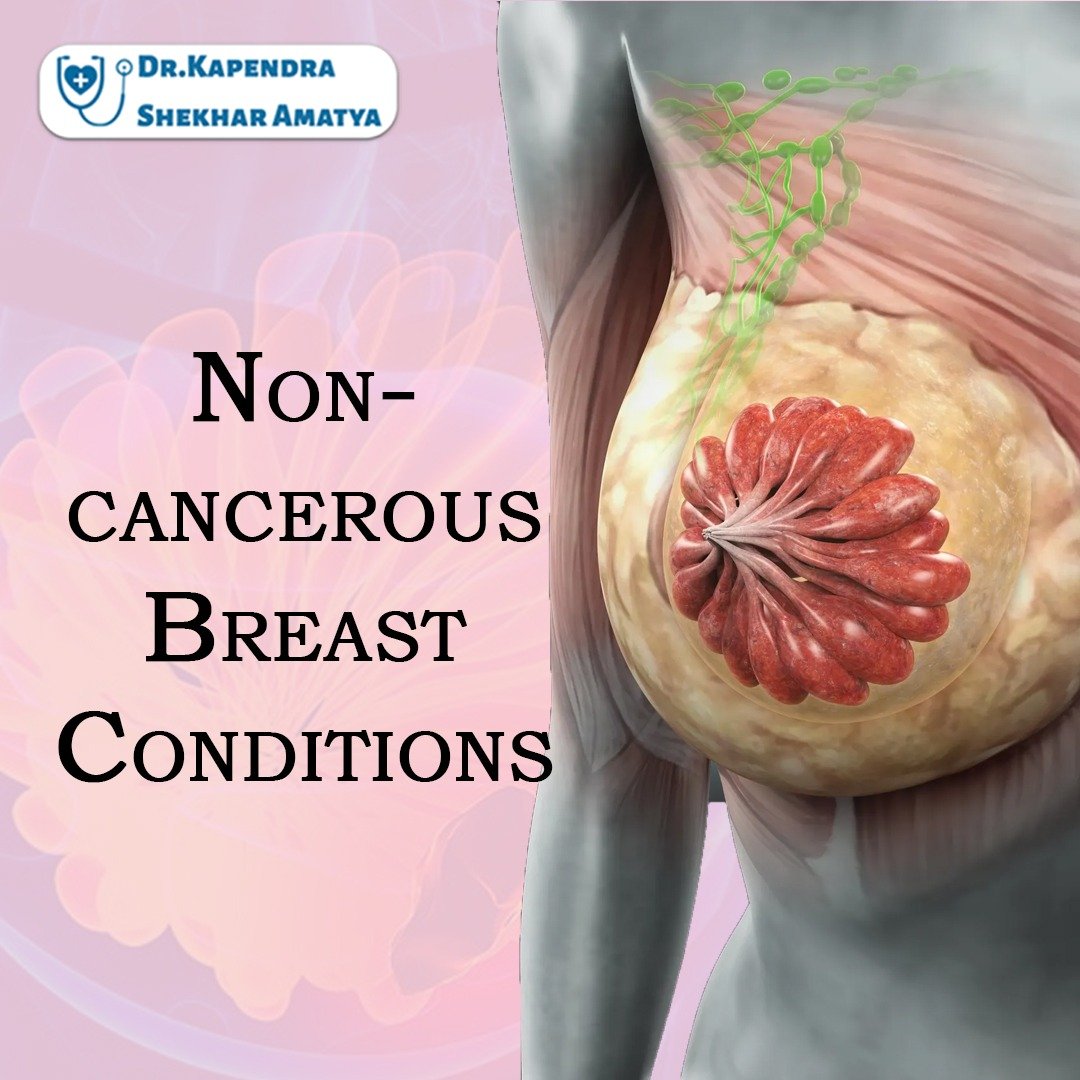
What Are Non-Cancerous Breast Conditions? Non-Cancerous Breast Conditions means a woman’s lifetime risk of developing benign breast conditions is higher than a man’s. Breast changes are most often benign. A benign breast condition does not pose a life-threatening threat, unlike breast cancer. In some cases, however, they are associated with a higher risk of developing breast cancer in the future. Breast lumps, pain, and nipple discharge are some of the symptoms that can accompany benign breast changes, while others can be detected through a mammogram. Sometimes it can be difficult to distinguish them from breast cancer, so other tests or examinations may be necessary. TYPES OF NON-CANCEROUS BREAST CONDITIONS? Fibrocystic Changes Non-Cancerous Breast Conditions: Breast lumps are often non-cancerous (benign) changes in fibrous tissue (fibrosis) or cysts, and they are collectively called fibrocystic changes. There used to be a medical term for these changes called fibrocystic disease, but today they are considered normal in many women. Fibrocystic changes tend to affect women of childbearing age but can happen to anyone at any age. Hyperplasia Non-Cancerous Breast Conditions: When the glands that produce milk in the breast multiply excessively, they undergo hyperplasia. Breast cancer is associated with certain types of hyperplasia, even though they are not cancers themselves. Depending on how the cells appear under a microscope, hyperplasia can be classified as usual or atypical. • A breast with ductal hyperplasia has abnormal cells lining its ducts, but these cells appear normal to the naked eye. • Atypical hyperplasia includes abnormal and distorted cells. Depending on the type, either atypical ductal hyperplasia or atypical lobular hyperplasia can occur. Depending on the type of hyperplasia, hyperplasia can increase your risk for breast cancer: • Usual ductal hyperplasia (also known as moderate or florid hyperplasia of the usual type, without atypia): Women with this condition are about 1.5 to 2 times as likely to develop breast cancer as women without abnormalities. • Atypical hyperplasia (either ADH or ALH): Women with ADH or ALH have a four to five times higher risk of breast cancer than those with no abnormalities. Lobular Carcinoma Non-Cancerous Breast Conditions: The presence of LCIS as a form of breast change can sometimes be detected by a breast biopsy. Milk-producing glands (lobules) of the breast are lined with cells that look like cancer cells, but they do not invade. The lobules of LCIS do not spread if left untreated, unlike invasive breast cancer. You are more likely to develop invasive breast cancer if you have LCIS in either breast later in life. Adenosis Non-Cancerous Breast Conditions: Adenosis is an enlargement of the glands (milk-producing cells) in the breast, which is benign (non-cancerous). Women with fibrocystic changes in their breasts often have adenosis in their biopsy samples. Adenosis tumor, tumoural adenosis, and aggregate adenosis are all names for this condition. The term adenosis does not refer to breast cancer, even though some of these terms include the word tumor. Sclerosing adenosis is characterized by enlarged lobules that are distorted by scarring. This type can cause breast pain. Fibroadenomas Non-Cancerous Breast Conditions: Fibroadenomas are breast tumors that comprise both glandular tissue and stromal tissue. Women in their 20s and 30s are most likely to develop fibroadenomas, but they can develop at any age. As a woman enters menopause, her breasts tend to shrink. Phyllodes Tumors Non-Cancerous Breast Conditions: In contrast to most breast cancers, phyllodes tumors start in the connective tissue (stromal) of the breast rather than the ducts or glands. Phyllodes tumors are usually benign (benign) and only a few are malignant (cancerous). Cancers of the phyllodes are usually found in older women, but they can affect anyone. A rare genetic condition known as Li-Fraumeni syndrome increases the risk of phyllodes tumors in women. Intraductal Papillomas Non-Cancerous Breast Conditions: Breast milk ducts contain benign (non-cancerous) papillomas called intraductal papillomas. In addition to gland tissue, they are made up of fibrous tissue and blood vessels (called fibrovascular tissue). There is a type of papilloma known as a solitary intraductal papilloma that grows in the large milk ducts near the nipple. It is common for them to cause clear or bloody nipple discharge, especially when only one breast is affected. Nipples are sometimes felt as small lumps behind or next to them. They can be painful at times. A papilloma may also develop in a small duct farther from the nipple. Often, there are several growths in this case (multiple papillomas). Nipple discharge is less likely to occur with these. A papillomatosis is characterized by small spots of cell growth within the ducts but is not as distinct as a papilloma. Fat Necrosis and Oil Cysts Non-Cancerous Breast: Injuries to fatty breast tissue can lead to fat necrosis, a benign (noncancerous) breast condition. Surgical or radiation treatment can also lead to it. Fat necrosis can be classified into different stages. As fat cells die, the contents of the cells are released, forming an oil cyst, a sac-like accumulation of greasy fluid. The walls of the cyst can develop calcium deposits over time, which can be seen on mammograms. When the body repairs damaged breast tissue, it usually replaces it with denser scar tissue. Mastitis Non-Cancerous Breast Conditions: Infection usually causes mastitis, which is inflammation (swelling) of the breast. Breastfeeding is the most common time for it to occur, but it can happen at any time in a woman’s life. Infections can occur as a result of clogged milk ducts, skin breaks, or a clogged milk duct. To fight the infection, white blood cells release substances that can cause swelling and increase blood flow in the body. Symptoms may include swelling, pain, redness, and warmth in the breast area. There are also symptoms of mastitis that look like the flu, such as fever and headaches. Duct Ectasia Non-Cancerous Breast Conditions: A benign breast condition, duct ectasia, occurs when the milk ducts in the breast enlarge, causing mammary duct ectasia. In this case, the duct can become blocked, resulting in the buildup of fluid. … Read more