
Things about Non-Cancerous Breast Conditions
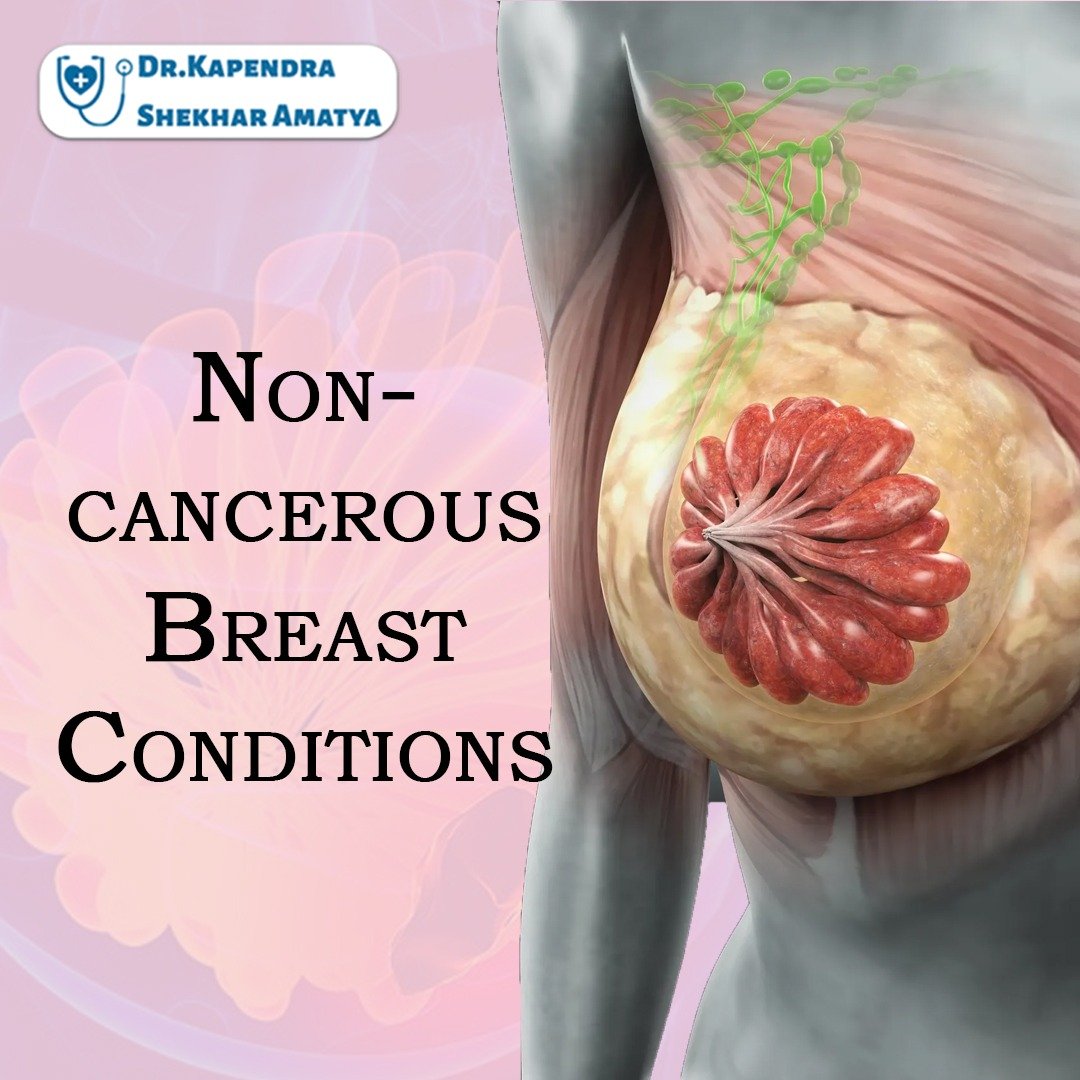
What Are Non-Cancerous Breast Conditions? Non-Cancerous Breast Conditions means a woman’s lifetime risk of developing benign breast conditions is higher than a man’s. Breast changes are most often benign. A benign breast condition does not pose a life-threatening threat, unlike breast cancer. In some cases, however, they are associated with a higher risk of developing breast cancer in the future. Breast lumps, pain, and nipple discharge are some of the symptoms that can accompany benign breast changes, while others can be detected through a mammogram. Sometimes it can be difficult to distinguish them from breast cancer, so other tests or examinations may be necessary. TYPES OF NON-CANCEROUS BREAST CONDITIONS? Fibrocystic Changes Non-Cancerous Breast Conditions: Breast lumps are often non-cancerous (benign) changes in fibrous tissue (fibrosis) or cysts, and they are collectively called fibrocystic changes. There used to be a medical term for these changes called fibrocystic disease, but today they are considered normal in many women. Fibrocystic changes tend to affect women of childbearing age but can happen to anyone at any age. Hyperplasia Non-Cancerous Breast Conditions: When the glands that produce milk in the breast multiply excessively, they undergo hyperplasia. Breast cancer is associated with certain types of hyperplasia, even though they are not cancers themselves. Depending on how the cells appear under a microscope, hyperplasia can be classified as usual or atypical. • A breast with ductal hyperplasia has abnormal cells lining its ducts, but these cells appear normal to the naked eye. • Atypical hyperplasia includes abnormal and distorted cells. Depending on the type, either atypical ductal hyperplasia or atypical lobular hyperplasia can occur. Depending on the type of hyperplasia, hyperplasia can increase your risk for breast cancer: • Usual ductal hyperplasia (also known as moderate or florid hyperplasia of the usual type, without atypia): Women with this condition are about 1.5 to 2 times as likely to develop breast cancer as women without abnormalities. • Atypical hyperplasia (either ADH or ALH): Women with ADH or ALH have a four to five times higher risk of breast cancer than those with no abnormalities. Lobular Carcinoma Non-Cancerous Breast Conditions: The presence of LCIS as a form of breast change can sometimes be detected by a breast biopsy. Milk-producing glands (lobules) of the breast are lined with cells that look like cancer cells, but they do not invade. The lobules of LCIS do not spread if left untreated, unlike invasive breast cancer. You are more likely to develop invasive breast cancer if you have LCIS in either breast later in life. Adenosis Non-Cancerous Breast Conditions: Adenosis is an enlargement of the glands (milk-producing cells) in the breast, which is benign (non-cancerous). Women with fibrocystic changes in their breasts often have adenosis in their biopsy samples. Adenosis tumor, tumoural adenosis, and aggregate adenosis are all names for this condition. The term adenosis does not refer to breast cancer, even though some of these terms include the word tumor. Sclerosing adenosis is characterized by enlarged lobules that are distorted by scarring. This type can cause breast pain. Fibroadenomas Non-Cancerous Breast Conditions: Fibroadenomas are breast tumors that comprise both glandular tissue and stromal tissue. Women in their 20s and 30s are most likely to develop fibroadenomas, but they can develop at any age. As a woman enters menopause, her breasts tend to shrink. Phyllodes Tumors Non-Cancerous Breast Conditions: In contrast to most breast cancers, phyllodes tumors start in the connective tissue (stromal) of the breast rather than the ducts or glands. Phyllodes tumors are usually benign (benign) and only a few are malignant (cancerous). Cancers of the phyllodes are usually found in older women, but they can affect anyone. A rare genetic condition known as Li-Fraumeni syndrome increases the risk of phyllodes tumors in women. Intraductal Papillomas Non-Cancerous Breast Conditions: Breast milk ducts contain benign (non-cancerous) papillomas called intraductal papillomas. In addition to gland tissue, they are made up of fibrous tissue and blood vessels (called fibrovascular tissue). There is a type of papilloma known as a solitary intraductal papilloma that grows in the large milk ducts near the nipple. It is common for them to cause clear or bloody nipple discharge, especially when only one breast is affected. Nipples are sometimes felt as small lumps behind or next to them. They can be painful at times. A papilloma may also develop in a small duct farther from the nipple. Often, there are several growths in this case (multiple papillomas). Nipple discharge is less likely to occur with these. A papillomatosis is characterized by small spots of cell growth within the ducts but is not as distinct as a papilloma. Fat Necrosis and Oil Cysts Non-Cancerous Breast: Injuries to fatty breast tissue can lead to fat necrosis, a benign (noncancerous) breast condition. Surgical or radiation treatment can also lead to it. Fat necrosis can be classified into different stages. As fat cells die, the contents of the cells are released, forming an oil cyst, a sac-like accumulation of greasy fluid. The walls of the cyst can develop calcium deposits over time, which can be seen on mammograms. When the body repairs damaged breast tissue, it usually replaces it with denser scar tissue. Mastitis Non-Cancerous Breast Conditions: Infection usually causes mastitis, which is inflammation (swelling) of the breast. Breastfeeding is the most common time for it to occur, but it can happen at any time in a woman’s life. Infections can occur as a result of clogged milk ducts, skin breaks, or a clogged milk duct. To fight the infection, white blood cells release substances that can cause swelling and increase blood flow in the body. Symptoms may include swelling, pain, redness, and warmth in the breast area. There are also symptoms of mastitis that look like the flu, such as fever and headaches. Duct Ectasia Non-Cancerous Breast Conditions: A benign breast condition, duct ectasia, occurs when the milk ducts in the breast enlarge, causing mammary duct ectasia. In this case, the duct can become blocked, resulting in the buildup of fluid. … Read more