

Breast cancer is often associated with older age. However, an increasing number of cases are being diagnosed in younger women, sometimes even in their 20s and 30s.
Breast Cancer at a Young Age presents unique medical, emotional, and social challenges. Delayed awareness, misconceptions about risk, and late consultation can affect outcomes significantly.
This article explains why breast cancer can occur at a young age, the underlying causes, early warning signs, and why timely evaluation and appropriate breast cancer treatment matter.
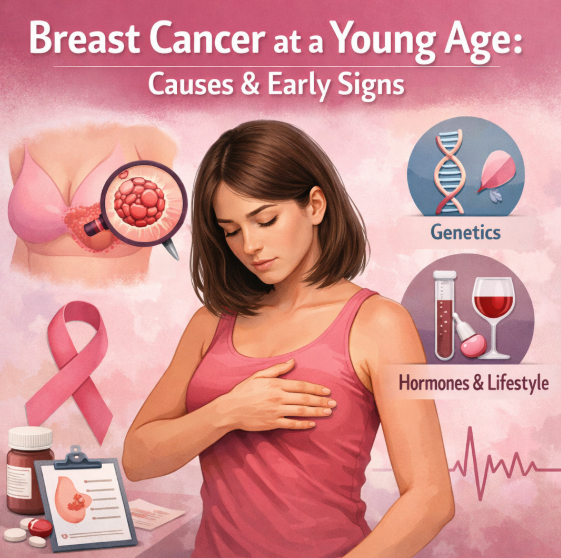
What Is Considered “Breast Cancer at a Young Age”?
Medically, breast cancer diagnosed before the age of 40 is commonly referred to as breast cancer at a young age.
Although less common than in older women, younger patients often:
- Present with more aggressive tumor types
- Experience delays in diagnosis
- Face complex treatment and fertility considerations
Awareness is therefore critical.
Why Breast Cancer in Young Women Often Goes Unnoticed
Many young women assume they are “too young” to develop breast cancer. This belief can delay medical attention.
Common reasons for delayed diagnosis include:
- Assuming breast lumps are hormonal or benign
- Lack of routine screening at a younger age
- Fear or denial
- Limited awareness about early symptoms
Early consultation with a qualified specialist can help avoid unnecessary delays in care.
Possible Causes and Risk Factors
Breast cancer does not have a single cause. Instead, it develops due to a combination of genetic, hormonal, and lifestyle factors.
Common Risk Factors in Younger Patients
- Family history of breast or ovarian cancer
- Genetic mutations (such as BRCA-related changes)
- Early onset of menstruation
- Hormonal influences
- Lifestyle factors (sedentary habits, obesity, alcohol use)
It is important to note that many young patients have no obvious risk factors, which is why symptom awareness is essential.
Early Warning Signs You Should Not Ignore
Breast cancer in younger individuals may not always present with pain.
Common warning signs include:
- A persistent breast lump
- Changes in breast shape or size
- Skin dimpling or redness
- Nipple inversion or discharge
- Swelling in the underarm area
Any change that persists beyond a normal menstrual cycle should be evaluated by a medical professional.
Importance of Early Medical Evaluation
Early assessment allows:
- Accurate diagnosis
- Timely treatment planning
- Better long-term outcomes
Consulting a qualified breast cancer surgeon in Nepal ensures that symptoms are evaluated using evidence-based diagnostic methods rather than assumptions.
Diagnosis of Breast Cancer in Young Patients
Diagnosis usually involves multiple steps to ensure accuracy.
Common Diagnostic Methods
- Clinical breast examination
- Ultrasound or imaging tests
- Tissue biopsy for confirmation
Because breast tissue in younger women is often denser, specialized evaluation is sometimes required to avoid missed findings.
Treatment Considerations at a Young Age
Breast cancer treatment in younger patients must be carefully planned.
Treatment may include:
- Surgery
- Chemotherapy
- Radiation therapy
- Hormone or targeted therapy (depending on tumor type)
Younger patients may also require counseling regarding:
- Fertility preservation
- Long-term follow-up
- Psychological support
A structured treatment plan guided by experienced specialists improves safety and outcomes.
Role of Experienced Breast Cancer Surgeons

Management of breast cancer requires clinical expertise and careful decision-making.
According to clinical insights commonly shared by Dr. Kapendra Shekhar Amatya, a breast cancer surgeon in Nepal with over 20 years of experience, early diagnosis and individualized treatment planning are crucial especially in younger patients where disease behavior and life impact differ from older age groups.
Specialist-led care helps ensure that treatment decisions are based on:
- Cancer stage and biology
- Patient health and long-term considerations
- Evidence-based surgical and medical protocols
Emotional and Social Impact of Early Breast Cancer
A breast cancer diagnosis at a young age can affect:
- Career and education
- Family planning
- Mental health and self-image
Support from healthcare professionals, family, and counseling services plays a vital role alongside medical treatment.
Why Awareness Matters More Than Fear
Breast cancer awareness is not meant to create fear.
It is meant to encourage timely action and informed decision-making.
Early evaluation does not always mean cancer but ignoring symptoms can delay care when it is most effective.
Medical Review & Professional Disclaimer
This article is intended for educational and awareness purposes only.
Diagnosis and treatment decisions should always be made in consultation with qualified medical professionals and specialist breast cancer teams.
Frequently Asked Questions (FAQ)
Can young women get breast cancer?
Yes. While less common, breast cancer can occur in women under 40.
Is breast cancer more aggressive at a young age?
In some cases, breast cancer in younger patients may grow or spread faster, making early diagnosis important.
Should young women perform breast self-exams?
Yes. Regular self-awareness helps identify changes early, though it does not replace medical evaluation.
Is breast cancer treatment available in Nepal?
Yes. Comprehensive breast cancer treatment is available in Nepal through specialized surgical and oncology care.
When should a breast lump be checked?
Any lump that persists beyond two weeks or changes over time should be evaluated by a doctor.
Final Thoughts
Breast Cancer at a Young Age is not a myth it is a medical reality.
Awareness, early evaluation, and expert-led treatment are the most effective tools for improving outcomes.
Recognizing symptoms early and seeking professional care can make a meaningful difference.